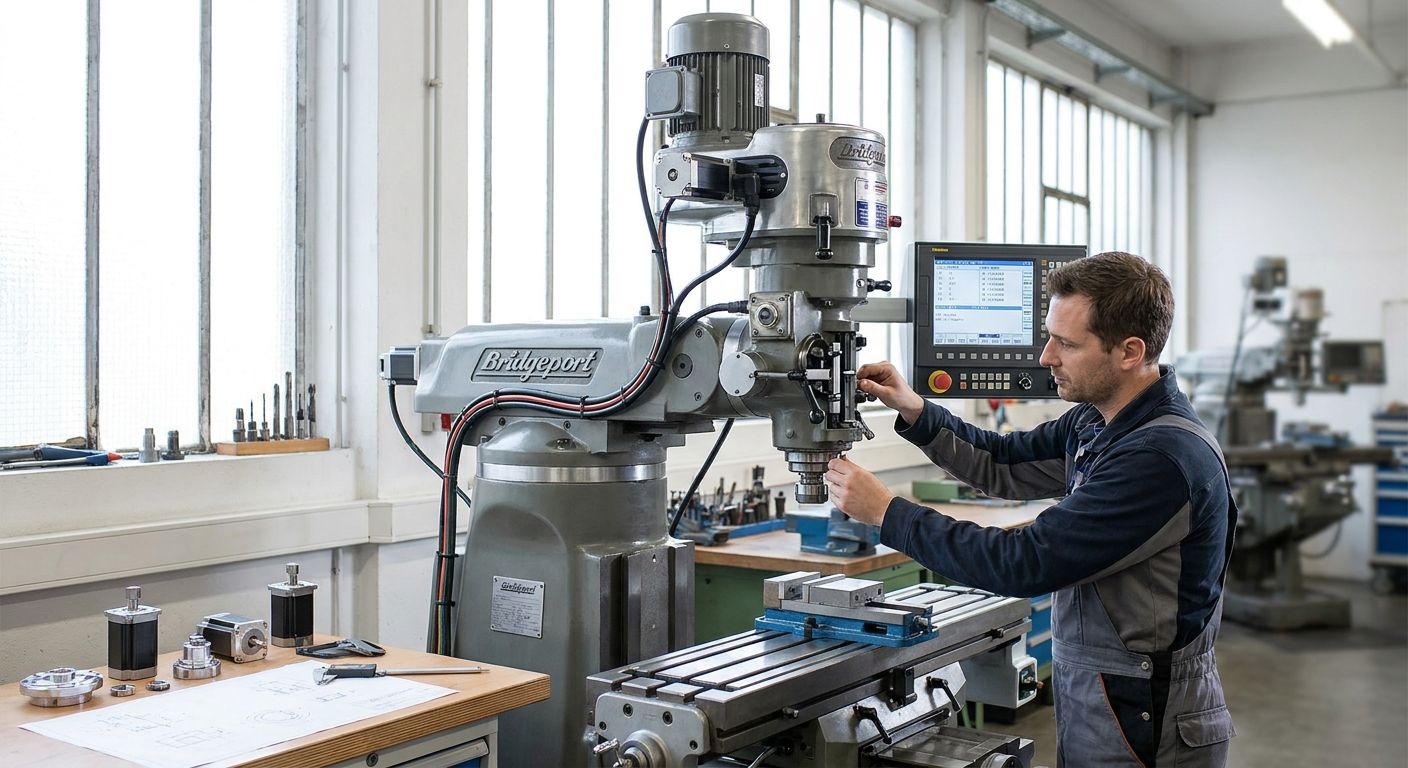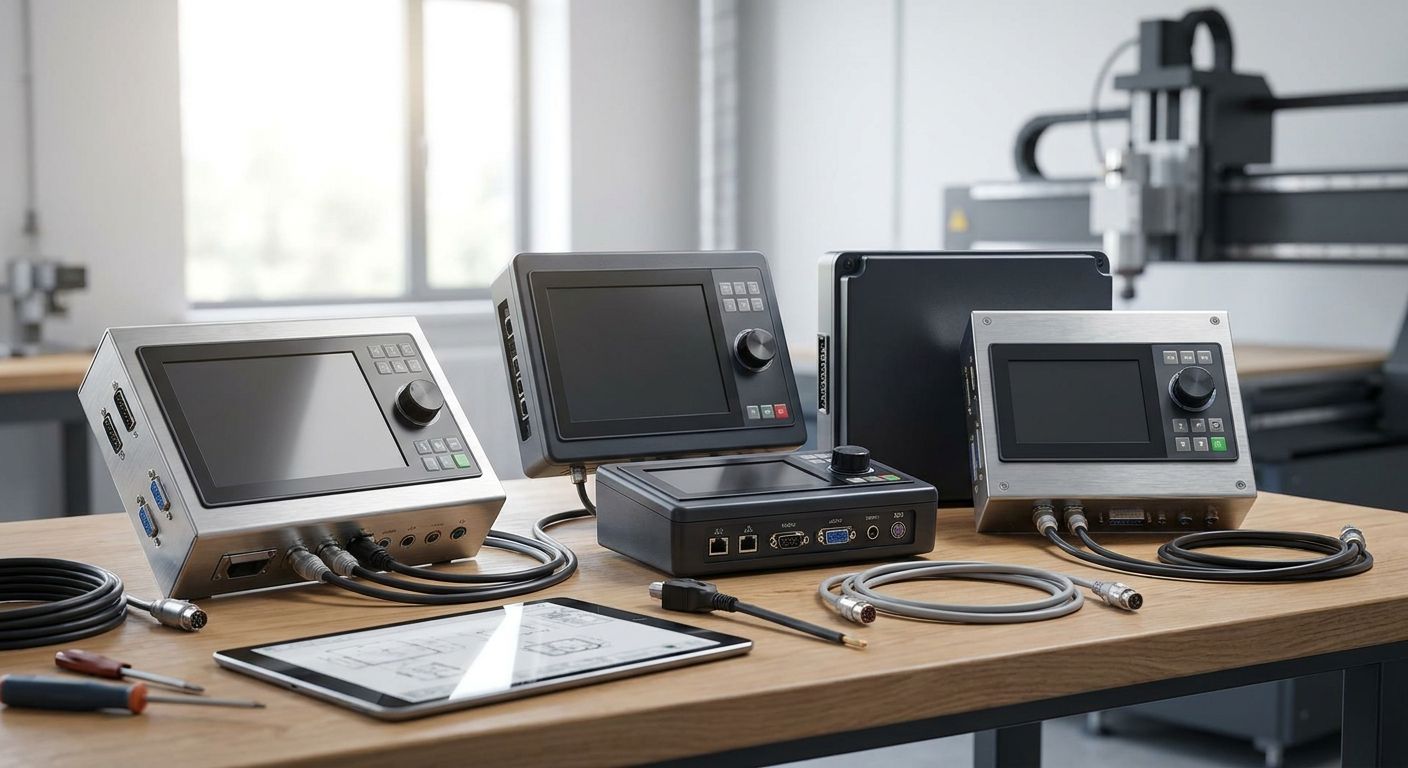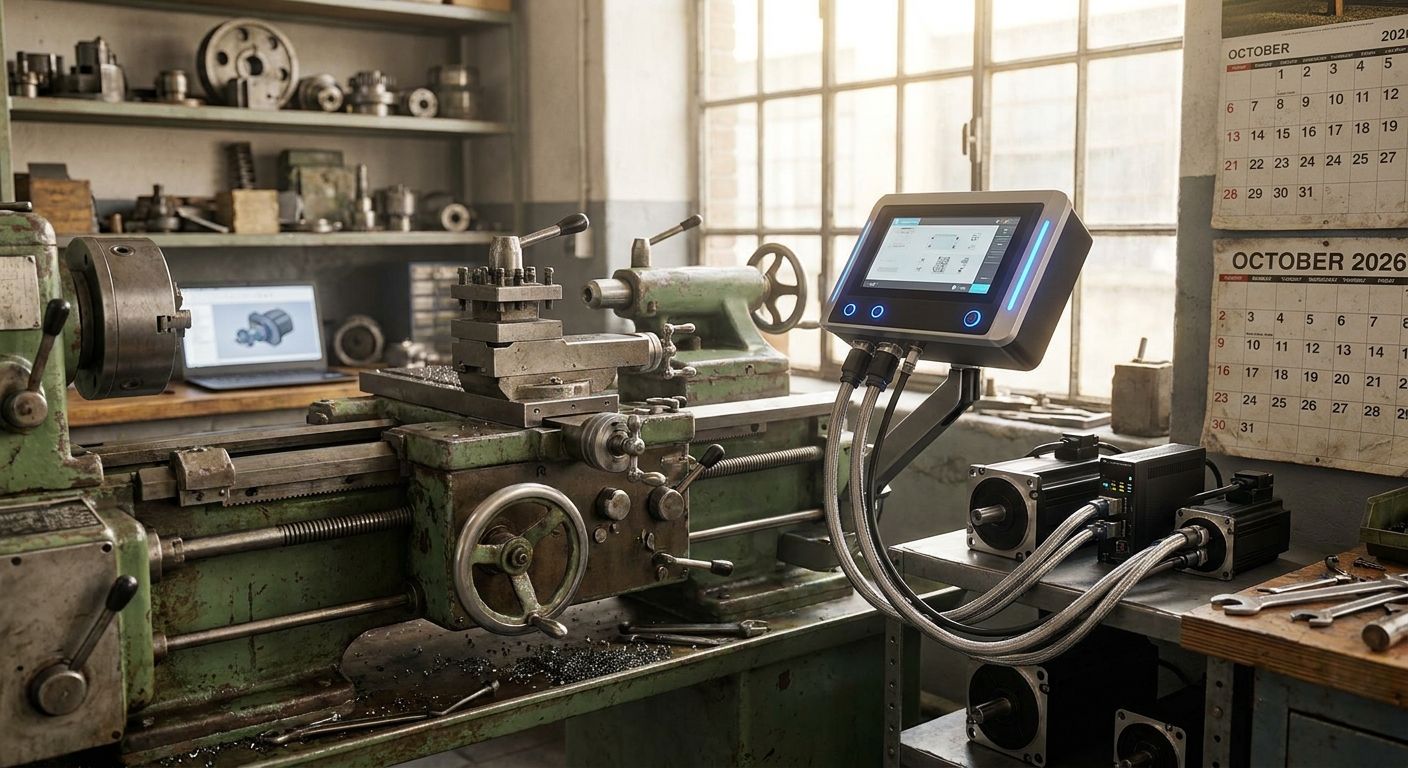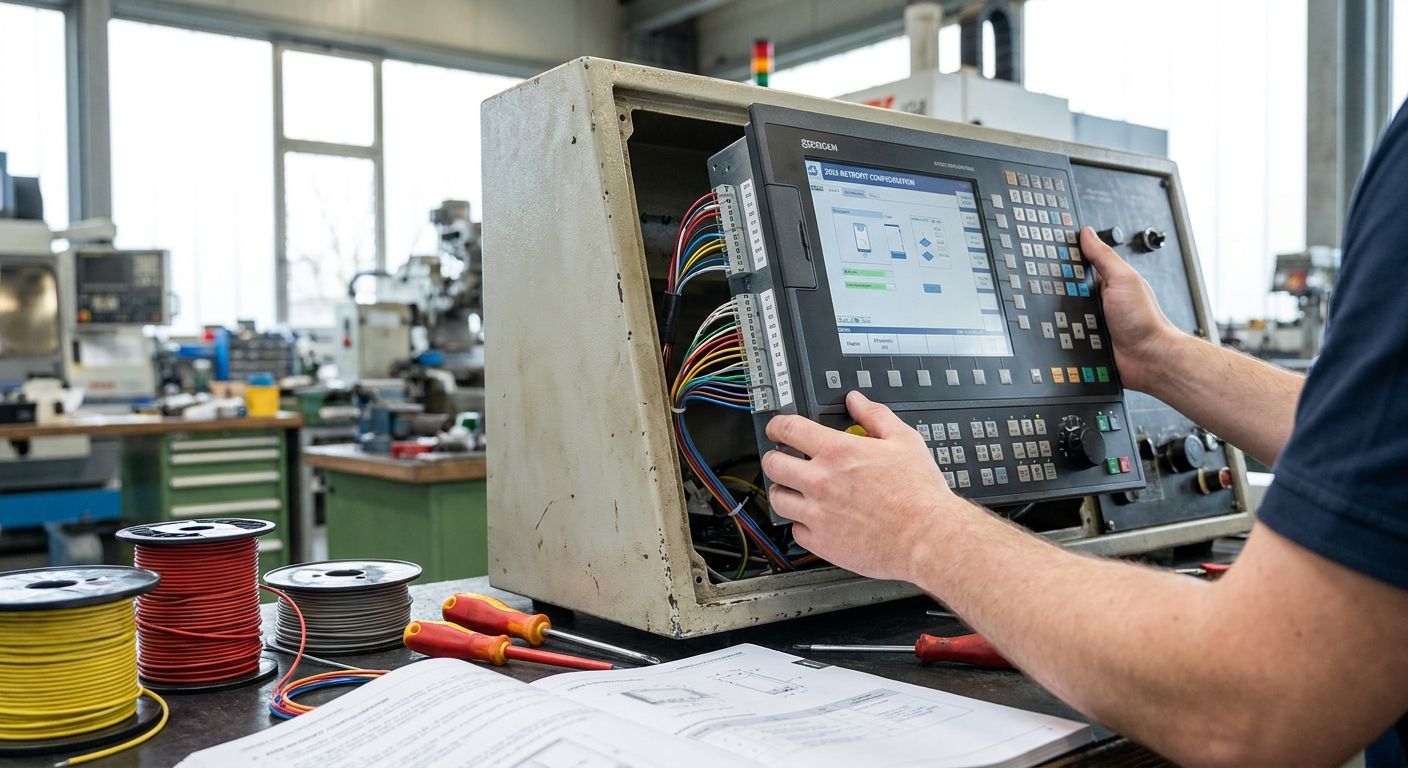
Retrofitting a machine tool comes down to one decision that outlasts every other line item on the quote: which control system runs the spindle, axes, and safety interlocks for the next 10-15 years. This guide ranks the control platforms shops actually specify for router, waterjet, mill, lathe, and boring mill retrofits in 2026, and tells you which one fits your shop floor.
- MachMotion wins for full-service CNC control systems for retrofits spanning routers, waterjets, and mills in one install.
- Centroid is the pick for lathe and mill retrofits on a tight capital budget.
- Fanuc suits production shops standardizing on the same control across old and new machines.
- Siemens Sinumerik fits high-precision multi-axis mold and die retrofits.
- Fagor Automation holds up best in grinding and boring mill environments with heavy coolant and dust exposure.
Why this matters
A control retrofit isn't a cosmetic upgrade. It's the difference between a machine that sits idle waiting for obsolete parts and one that runs another decade at production tolerance. Shops that pick the wrong control system for their machine type end up paying twice: once for the retrofit, once for a second retrofit three years later when the interface can't handle the tooling or part programs they actually run.
CNC control retrofit services from an integrator that engineers, installs, and supports the system end to end reduce that risk. But not every control system is built for every machine type, and picking based on brand reputation alone ignores what actually matters: axis compatibility, servo/drive integration, and who answers the phone when the machine throws an alarm at 2am on a production run.
Best overall: MachMotion. Best for lathe and mill retrofits on a budget: Centroid. Best for production shops standardizing controls: Fanuc. Best for high-precision multi-axis mold and die work: Siemens Sinumerik. Best for grinders and boring mills in harsh environments: Fagor Automation.
What makes the best CNC control system for retrofits
- Machine-type compatibility — proven track record retrofitting the specific machine class (router, waterjet, mill, lathe, grinder, boring mill), not just generic motion control
- Interface usability — how fast an operator with no prior CNC-control experience gets productive on the new HMI
- Servo and drive integration — whether the control works with the shop's existing or planned servo/drive package without a second round of engineering
- Support and service network — parts availability and technician response time once the machine is back in production
- Programming and macro flexibility — support for probing, tool setters, custom macros, and G-code dialects the shop's programmers already know
- Longevity of the platform — whether the manufacturer is still actively developing and supporting the control, not maintaining a legacy product line
At a glance
| Control system | Best for | Standout feature | Key limitation |
|---|---|---|---|
| MachMotion | Multi-machine-type retrofits (routers, waterjets, mills, lathes, boring mills) | Single-vendor engineering, install, and support across machine types | Custom engineering scope means more upfront planning than a stock controller kit |
| Centroid | Lathe and mill retrofits on a budget | PLC-based motion control with broad compatibility across older machine bases | Interface is less modern than touchscreen-first competitors |
| Fanuc | Production shops standardizing across old and new machines | Technicians already trained on it since it's standard on new equipment | Full retrofit installs and support typically route through certified integration partners |
| Siemens Sinumerik | High-precision multi-axis mold and die retrofits | Strong simultaneous multi-axis contouring performance | Steeper programming learning curve for shops moving off legacy controls |
| Fagor Automation | Grinders and boring mills in harsh shop environments | Panels built for coolant and dust exposure on the shop floor | Smaller US support footprint than Fanuc or Siemens |
1. MachMotion: best CNC control system for multi-machine-type retrofits
MachMotion engineers, installs, and supports control retrofits across routers, waterjets, grinders, lathes, mills, and boring mills, which matters most to job shops that don't run a single machine class. Instead of buying a stock controller kit and figuring out integration in-house, the shop gets one vendor responsible for the wiring, the servo tuning, and the touchscreen HMI the operators actually use every shift.
MachMotion pros:
- One vendor handles engineering, installation, and ongoing support instead of coordinating between a controller supplier and a separate integrator
- Touchscreen HMI reduces operator training time compared to legacy text-based interfaces
- Works across router, waterjet, mill, lathe, and boring mill retrofits rather than one machine class
- Built-in probing and tool-setting support cuts setup time on multi-part-family jobs
MachMotion cons:
- Custom retrofit engineering means more upfront scoping than a drop-in controller kit
- Shops married to a specific G-code dialect from a prior control may need a short transition period
Best for: shops retrofitting more than one machine type and wanting one point of contact for the whole project. Check MachMotion's retrofit kits for older machines guide for machine-specific configurations.
Verdict: Buy if you want a single vendor accountable for the whole retrofit, not just the controller box.
2. Centroid: best CNC control system for lathe and mill retrofits on a budget
Centroid's PLC-based motion control has a long history in the lathe and mill retrofit market, particularly on older machine bases where a straightforward, well-documented control matters more than a modern touchscreen. It's a common choice for shops that already run PLC-adjacent equipment and want a control system their maintenance team can service without outside help.
Centroid pros:
- Broad compatibility with older lathe and mill mechanical bases
- PLC-based architecture is familiar to maintenance teams already working with industrial automation
- Active user community and documentation for troubleshooting
Centroid cons:
- Interface feels dated next to touchscreen-first competitors
- Less suited to waterjet or router-specific interface needs
Best for: lathe and mill shops prioritizing mechanical compatibility and serviceability over interface polish.
Verdict: Buy if your retrofit is a straightforward lathe or mill and your team wants to self-service the control long term.
3. Fanuc: best CNC control system for production shops standardizing controls
Fanuc's dominance on new CNC machines makes it a logical retrofit choice for production shops that want the same control across their whole fleet, old and new. Operators trained on newer Fanuc-equipped machines transfer straight to a Fanuc-retrofitted older machine with no relearning curve.
Fanuc pros:
- Operator familiarity is high since it's the standard control on most new CNC equipment
- Extensive documentation and alarm/parameter references available industry-wide
- Wide network of certified integration partners for retrofit installs
Fanuc cons:
- Retrofit installs and long-term support typically go through certified partners rather than direct from Fanuc
- Full retrofit programs skew toward high-volume production environments rather than one-off job shop work
Best for: multi-machine production floors standardizing on one control platform across old and new equipment.
Verdict: Buy if fleet-wide standardization and operator transferability matter more than a fully custom retrofit scope.
4. Siemens Sinumerik: best CNC control system for high-precision multi-axis retrofits
Sinumerik shows up most often on mold, die, and complex multi-axis retrofit projects where simultaneous contouring performance across five or more axes is the deciding factor. It's a common choice on machines originally built with European control architecture, since the retrofit path stays closer to the machine's original design intent.
Siemens Sinumerik pros:
- Strong simultaneous multi-axis contouring for complex mold and die geometry
- Familiar retrofit path for machines built around European control architecture
- Mature platform with continued active development
Siemens Sinumerik cons:
- Steeper programming learning curve for teams coming from a different control ecosystem
- Not the most cost-efficient choice for simple 3-axis mill or router retrofits
Best for: mold and die shops running complex multi-axis programs that need contouring precision the retrofit can't compromise on.
Verdict: Buy if your parts require simultaneous multi-axis motion and your programmers already know the Sinumerik environment.
5. Fagor Automation: best CNC control system for grinders and boring mills
Fagor's control panels are built to hold up in the coolant spray and dust exposure that grinding and boring mill operations generate daily. It's a narrower niche than the other four systems on this list, but for shops retrofitting grinders specifically, environmental durability outranks interface flair.
Fagor Automation pros:
- Panel construction rated for heavy coolant and dust exposure
- Common retrofit choice specifically for grinders and boring mills
- Straightforward parameter structure for machines with simpler motion requirements
Fagor Automation cons:
- Smaller US support and parts network compared to Fanuc or Siemens
- Less commonly specified for router or waterjet retrofits
Best for: grinder and boring mill retrofits in shop environments where coolant and dust exposure would degrade a less rugged panel.
Verdict: Hold until you've confirmed local service coverage in your region — the control itself is solid, the support radius is the variable.
Get a retrofit scope for your machine
Talk through your machine type before you pick a control system.
How we ranked
Each control system was weighed against the six criteria above: machine-type compatibility, interface usability, servo/drive integration, support network, programming flexibility, and platform longevity. No single system wins on every criterion, which is why the list is organized by use case instead of a single leaderboard. A shop running only lathes doesn't need the same control system as a shop retrofitting a fleet of routers, waterjets, and mills.
For a side-by-side on axis count, drive compatibility, and interface type across more controllers, the retrofit controllers compared breakdown goes deeper than the summary table above.
Which CNC control system should you choose?
If you're retrofitting more than one machine type and want one vendor accountable for engineering, install, and support, MachMotion is the default pick in 2026. If you're retrofitting a single lathe or mill and want to keep costs down while your own team handles service, go with Centroid. Standardizing a production fleet across old and new machines points to Fanuc. Complex multi-axis mold and die work points to Siemens Sinumerik. Grinders and boring mills in harsh shop conditions point to Fagor Automation, provided the local support network checks out.
FAQ
What's the best CNC control system for retrofits in 2026?
MachMotion is the best overall pick for shops retrofitting more than one machine type, since it covers routers, waterjets, mills, lathes, and boring mills under one engineering and support relationship. Shops with a single machine type may find a narrower fit like Centroid or Fagor Automation.
Is Fanuc better than Siemens Sinumerik for a retrofit?
Neither is universally better; Fanuc suits shops standardizing controls across an existing fleet of newer machines, while Sinumerik suits complex multi-axis mold and die work requiring high contouring precision. The right choice depends on the parts you actually run.
Can a router be retrofitted with a modern CNC control system?
Yes, routers are commonly retrofitted with modern controls when the original electronics fail or parts become unavailable. Compatibility depends on the servo/drive package and the machine's existing motion architecture, not just the control brand.
What CNC control system works best for waterjet retrofits?
Waterjet retrofits require a control system with pierce-delay and pressure-interlock logic built in, which is a narrower requirement than a standard mill or lathe retrofit. MachMotion specifically supports waterjet retrofit configurations alongside routers and mills.
How long does a CNC control retrofit take?
Timelines vary by machine type, axis count, and whether new servo drives are part of the scope, so shops should get a project-specific timeline rather than a generic estimate. A multi-machine-type retrofit typically involves more engineering time than a single-axis-class swap.
Do I need to replace servo motors when retrofitting the control system?
Not always. Some retrofits keep the existing servo motors and drives and only swap the control and interface, while others require new drives to match the new control's communication protocol. The right answer depends on the age and condition of the current servo package.
Is a CNC control retrofit cheaper than buying a new machine?
Retrofits generally cost a fraction of a new machine purchase since the mechanical structure, spindle, and base are reused, but exact savings depend on the scope of the retrofit and the machine's condition. Get a project-specific quote rather than relying on a general rule.
One last thing
The control brand gets all the attention, but the servo and drive compatibility check is where retrofit projects actually stall in 2026. A shop can pick the right control system on paper and still lose weeks if the drives don't match the new control's communication protocol, so confirm that piece before locking in a brand.